

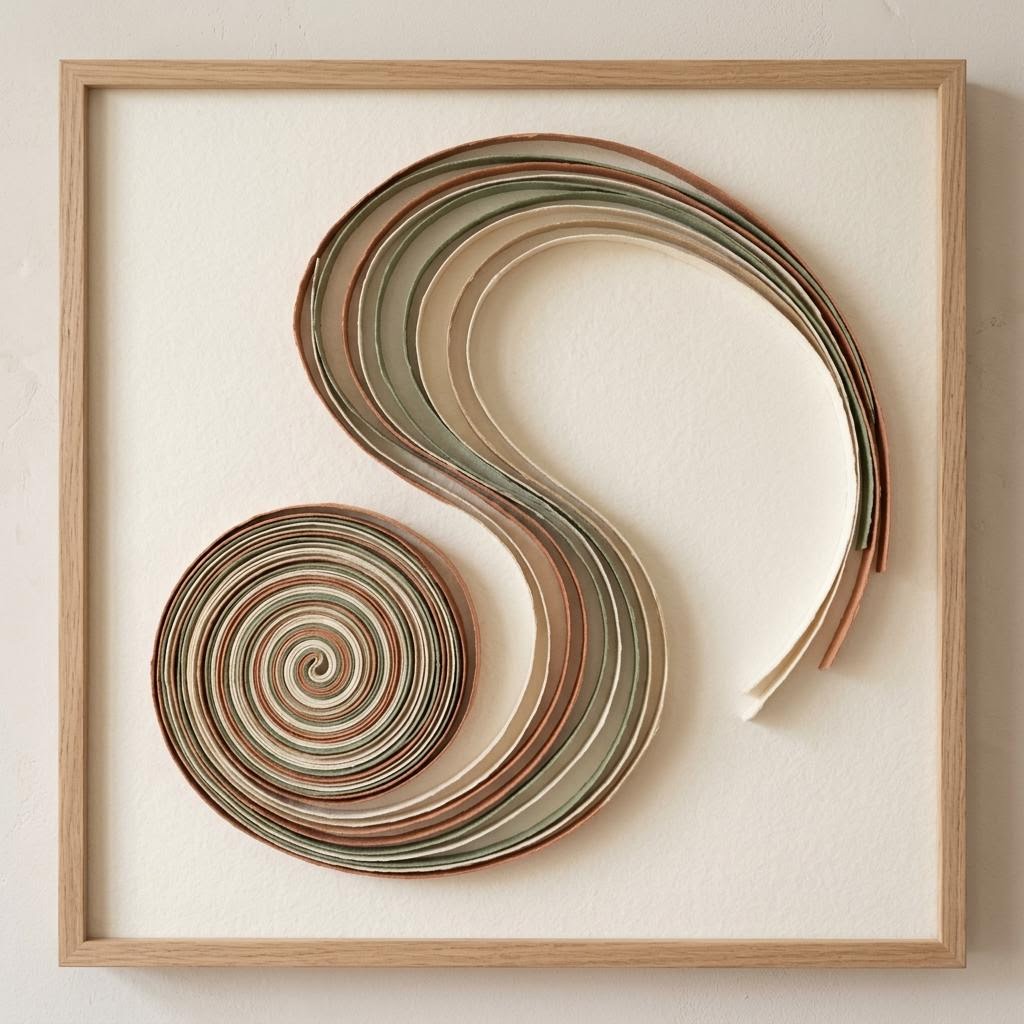
When anxiety starts making your world smaller
Published · Reading time: about 6 minutes
Written by Alan Malt · BACP Member 422583
Anxiety does not always announce itself with a panic attack. Often, it moves much more quietly. It starts by suggesting that you skip the crowded event, then it suggests avoiding the busy supermarket, and before long, it has drawn a small, tight circle around your life, convincing you that the only safe place is inside it.
The logic of avoidance
Avoidance makes perfect sense in the short term. If going to a social event makes your chest tight and your mind race, cancelling at the last minute brings an immediate, profound rush of relief. The anxiety drops instantly. Your brain registers this and learns a very clear lesson: avoiding things keeps us safe and makes us feel better.
The problem is what happens the next time. Because you avoided the situation, you never got to learn that you could have survived it. You never got to see that the panic would have peaked and then eventually passed.
Instead, the anxiety grows slightly stronger, and the list of things you need to avoid grows slightly longer. Avoidance feeds the anxiety it is trying to escape.
When the safe zone gets smaller
It rarely stops at one thing. Anxiety has a tendency to generalise. If you had a panic attack on a train, you might start avoiding all trains. Then, you might start avoiding buses because they feel too similar. Soon, even being in a car far from home feels risky.
This is how a world shrinks. You start mapping your life not by what you want to do, but by what your anxiety will tolerate. You check where the exits are, you calculate how quickly you could leave, and you find excuses to stay within your known, safe parameters.
The tragic irony is that the smaller the world gets, the more intense the anxiety becomes about the things outside it. Safety becomes a prison of your own making.
The physical exhaustion of vigilance
Living within a highly anxious framework requires constant vigilance. You are continually scanning your environment for threats, and constantly scanning your own body for signs of panic. A slight change in your breathing or a skipped heartbeat is immediately interpreted as the start of a disaster.
This internal alarm system is exhausting to run. It leaves you feeling permanently on edge, tired, and easily overwhelmed. It is hard to be present in a conversation or enjoy a quiet moment when a part of your brain is constantly on guard duty.
The shame of the shrinking world
As the world shrinks, shame often moves in to take up the empty space. You see other people travelling, socialising, and moving freely through the world, and you wonder why you find it so impossible.
You might start lying to friends to cover up why you cannot attend things, which leads to feelings of isolation and disconnection. The shame tells you that you are broken, weak, or foolish.
You are none of these things. You are simply caught in a highly effective neurological loop that is doing its misguided best to protect you. The mechanism is working perfectly; it is just reacting to the wrong threats.
Gently pushing back the boundary
You cannot break out of the small circle by forcing yourself into massive, terrifying leaps. Pushing too hard usually just causes a severe panic response, which reinforces the brain's belief that the world is dangerous, leading you to retreat even further.
Expanding the world requires gentle, graded steps. It is about deliberately stepping just over the boundary of what feels comfortable, sitting with the moderate anxiety that arises, and waiting for it to naturally subside.
This is not about being fearless. It is about proving to your nervous system, over and over again, that you can feel afraid and still be safe.
How counselling provides a map
Stepping back out into the world is daunting, and you do not have to do it alone. In counselling, we can look at the specific shape of your anxiety without judging it.
We can map where the boundaries currently are, and carefully, at your pace, plan small ways to test them. It provides a space to debrief after you have tried something difficult, to celebrate the small victories that others might not understand, and to untangle the deeper roots of why the world started feeling so unsafe in the first place.
The goal is not to eliminate anxiety entirely, a life with zero anxiety does not exist. The goal is to make sure anxiety is no longer the one making all the decisions about where you can go and who you can be.
Frequently asked questions
- Is it agoraphobia?
- Agoraphobia is often misunderstood as simply a fear of leaving the house. It is more accurately a fear of being in situations where escape might be difficult or help unavailable if things go wrong. If you are avoiding places for these reasons, it may be on the spectrum of agoraphobia, but the label matters less than how it is affecting your life.
- Will I ever be able to do normal things easily again?
- Yes. The brain's neuroplasticity means that just as it learned to fear these situations, it can relearn that they are safe. It takes time and gentle practice, but people absolutely do regain their freedom.
- What should I do when a panic attack starts?
- The most effective thing is often the hardest: do not fight it. Fighting panic tells the brain there really is a threat. Try to drop your shoulders, let the adrenaline wash over you, and remind yourself, 'This is uncomfortable, but it is not dangerous.' It will pass.
- Should I force myself to go to the event even if I am terrified?
- It depends on the level of terror. Stepping slightly outside your comfort zone is good; forcing yourself into sheer panic is usually counterproductive. Aim for a challenge that feels difficult but manageable, not one that overwhelms you completely.
- How can I explain this to my friends without sounding crazy?
- You can keep it simple. 'I am dealing with some anxiety at the moment that makes crowded places really difficult for me. I want to see you, but could we do something quieter instead?' True friends will accommodate the request without needing a deep medical explanation.
You do not have to live inside the small circle forever.
If any part of this felt familiar, perhaps we could explore it together when you're ready.
Keep reading
You can also read about Alan and how he works, explore person-centred counselling in Retford, or get in touch whenever you feel ready.